
How Road Design Influences Driver Behavior and Safety

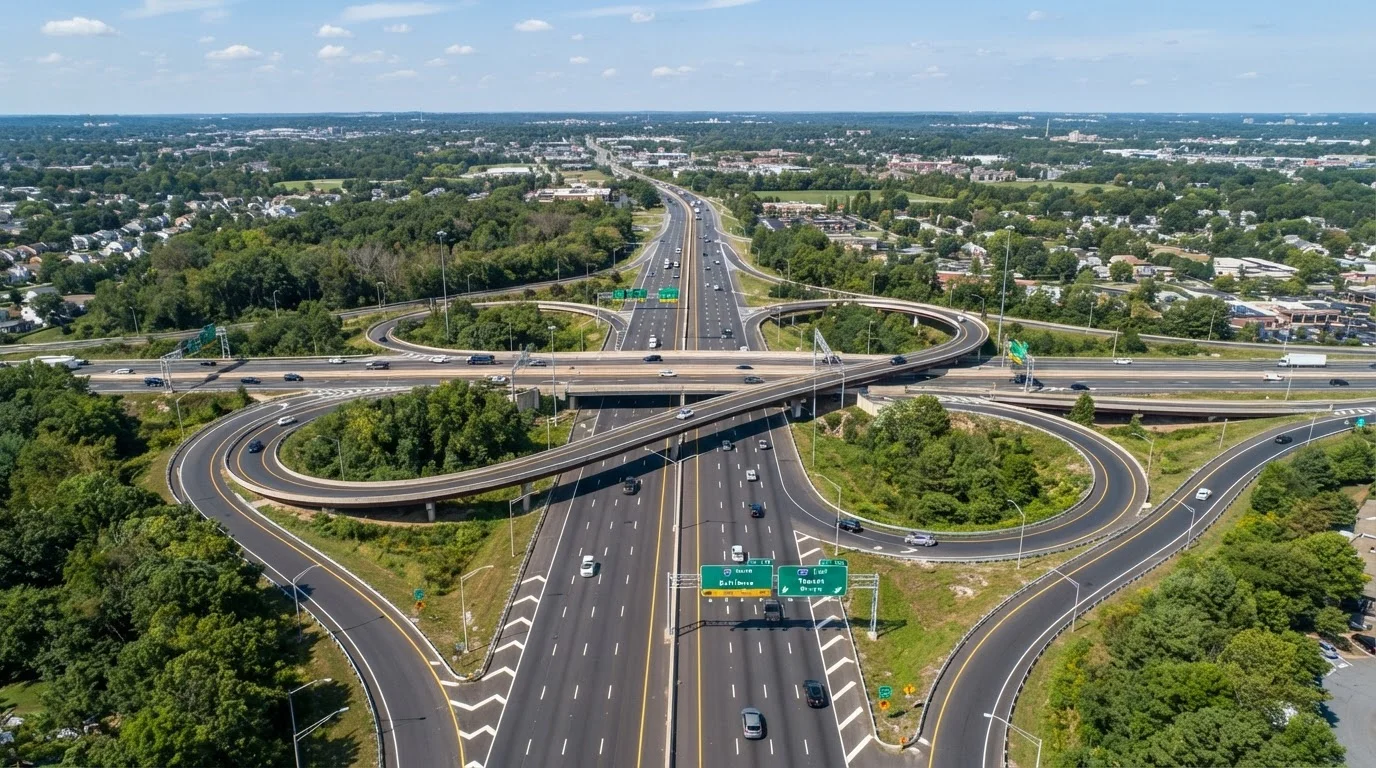
Photo: TheSearchHound.com | One Stop Answer To All Your Questions editorial
Key Takeaways
- Road geometry, lane width, and signage all influence driver speed and decision-making.
- Wider lanes tend to encourage faster driving, even on roads with lower speed limits.
- Poor signage placement or cluttered visual environments increase cognitive load for drivers.
- Rumble strips, medians, and clear markings are proven tools for reducing crash rates.
- Understanding road design helps you drive more consciously and anticipate hazards earlier.
The Environment Drives the Driver
Most drivers think of safety as a function of their own skill or attentiveness. But road infrastructure plays an equally significant role. Engineers and transportation researchers have long recognized that the physical characteristics of a road - its geometry, markings, lighting, and signage - create conditions that nudge drivers toward certain behaviors, often unconsciously.
This matters for everyday drivers because it reframes the question from "how well am I driving?" to "what is this road asking of me?" If you're building your foundation as a new driver, understanding how road design shapes decisions is a critical piece of the puzzle that most driver's education programs underemphasize.
~56%
Rural road share of U.S. traffic fatalities
According to the Federal Highway Administration, rural roads consistently account for more than half of all U.S. traffic fatalities despite carrying a minority of total vehicle miles traveled.
~75%
Reduction in fatal crashes at roundabouts
The Insurance Institute for Highway Safety has reported that converting traditional intersections to roundabouts can reduce fatal crashes by roughly 75% at those locations.
32 vs. 8
Conflict points: traditional intersection vs. roundabout
Transportation engineers use conflict point analysis to measure intersection risk; a standard four-way intersection has 32 vehicle conflict points compared to 8 in a single-lane roundabout.
Lane Width, Speed, and the Comfort Effect
One of the most studied relationships in road design is between lane width and driver speed. Counterintuitively, drivers on wider lanes tend to travel faster - not because the speed limit changed, but because the road feels safer and more forgiving. This phenomenon, sometimes called the "comfort effect," has significant implications for residential streets where wide lanes intended for utility vehicles may unintentionally raise operating speeds in neighborhoods.
Narrower lanes in urban contexts, by contrast, tend to reduce operating speeds without requiring enforcement. This is why many cities have moved toward lane diets - reducing lane width or lane count - as a traffic-calming measure. Understanding this helps you recognize that your instinctive sense of a "safe" speed on a given road may be shaped more by the road's geometry than by any rational assessment of actual risk.
Curves, Sightlines, and Perception of Risk
Horizontal and vertical curves - bends and hills - affect how far ahead a driver can see, which in turn shapes braking decisions and speed management. A curve with a limited sight distance forces drivers to enter conservatively, assuming a hazard may be waiting beyond what's visible. When sight distance is adequate and clearly communicated through signage, drivers can plan further ahead.
Poor curve design - especially on rural two-lane roads - is a leading contributor to run-off-road crashes. These are situations where the road's geometry exceeds what a driver at a given speed can safely navigate. Recognizing an unmarked or advisory-speed-posted curve as a genuine engineering signal is an important habit. For a broader view of how different road environments create distinct hazard profiles, see our piece on city driving vs. highway driving safety.
Read Advisory Speed Signs as Engineering Data
Signage, Markings, and Cognitive Load
Road signs and pavement markings serve as a continuous communication system between infrastructure designers and drivers. When that system is well-designed, information arrives at the right moment, giving drivers enough time to process and act. When it's cluttered, poorly sequenced, or faded, it increases cognitive load - the mental effort required to make driving decisions.
High cognitive load environments are more fatiguing and leave less mental bandwidth for detecting unexpected hazards. This is why situational awareness - actively scanning your environment - becomes especially important in visually complex areas like busy intersections, highway work zones, or unfamiliar urban streets. Pavement markings also guide lane position during low-visibility conditions; faded markings in rain or at night represent a genuine safety gap.
Intersections, Medians, and Conflict Points
Intersections concentrate risk by creating conflict points - locations where vehicle paths cross. The design of an intersection directly determines how many conflict points exist and how clearly they are communicated to drivers. Traditional four-way intersections have 32 potential vehicle conflict points. Roundabouts reduce this to 8, and do so at lower speeds, which is why injury severity at roundabouts is typically lower than at signalized intersections.
Raised medians serve a related function: they prevent left turns and cross-traffic movements at high-risk locations, channeling traffic into safer, more predictable patterns. As a driver, recognizing intersection design complexity - especially when approaching unfamiliar layouts - is a prompt to slow down and increase your scan pattern. This connects directly to skills covered in managing lane changes and blind spots, where geometry and sightlines are equally at play.
Becoming a More Conscious Driver
Road design is not something most drivers consciously analyze - but even a basic awareness of how infrastructure shapes behavior makes you a more adaptive driver. When a road feels fast, ask whether it's designed to be fast or simply designed in a way that encourages speed. When signage is dense or confusing, recognize the added cognitive demand and allow more processing time. When lighting is poor, adjust your following distance accordingly.
These are not complex adjustments - they're habit shifts that come from understanding that your driving environment is always communicating something. Drivers who read that environment well are better prepared for the unexpected. For a broader look at how safety demands shift across your entire driving life, see safe driving across every stage of life.
Frequently Asked Questions
The content on this site is provided for informational purposes only and should not be considered a substitute for professional advice. While we strive to provide accurate and up-to-date information, we make no guarantees regarding its completeness or accuracy. Always consult a qualified professional for advice specific to your circumstances before making any decisions.