
New to the Road: Building a Foundation for Safe Driving

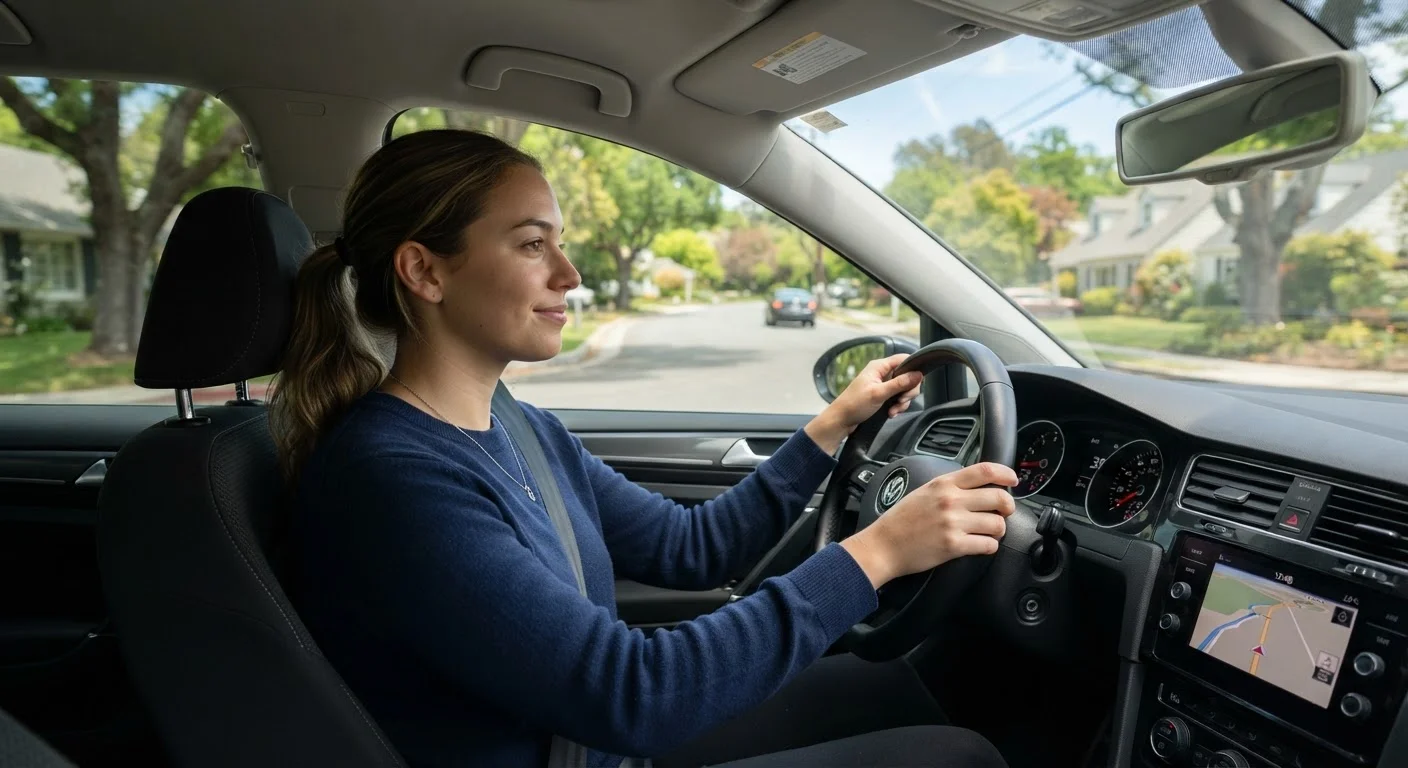
Photo: TheSearchHound.com | One Stop Answer To All Your Questions editorial
Key Takeaways
- New drivers face the highest crash risk in their first 12-18 months of independent driving.
- Scanning the road ahead - not just immediately in front - is one of the most important skills to develop.
- Maintaining adequate following distance gives you time and space to respond to unexpected hazards.
- Distractions, including phones and passengers, are among the leading contributors to crashes for new drivers.
- Understanding your vehicle's basic systems makes you a safer and more confident driver.
- Safe habits formed early tend to persist - making the learning period the most impactful time to practice them.
Why the First Year Matters Most
Getting your license is a milestone, but it marks the beginning of a learning curve, not the end of one. Studies from highway safety researchers consistently find that newly licensed drivers - particularly teenagers and young adults - face substantially higher crash rates in their first year of independent driving than at any subsequent point.
The reasons are practical: unsupervised driving introduces conditions that supervised practice rarely replicates. Night driving, highway merging, adverse weather, and high-traffic urban environments all demand judgment that only develops with deliberate exposure. The goal during this period isn't simply to avoid accidents - it's to build a mental framework for reading the road that will serve you for decades. For a broader look at how driving demands shift over time, see Safe Driving Across Every Stage of Life.
Situational Awareness: Seeing the Full Picture
New drivers often fix their gaze on the car directly in front of them. Experienced drivers scan - continuously sweeping their eyes across mirrors, intersections, and the road 10 to 15 seconds ahead. This distinction matters enormously because hazards rarely announce themselves.
Practical habits to build situational awareness include:
- Check mirrors every 5-8 seconds to maintain an up-to-date mental map of surrounding traffic.
- Scan intersections early - approach assuming cross-traffic may not stop, even at green lights.
- Identify escape routes - know where you could steer if the car ahead brakes suddenly.
- Watch for gap fillers - cyclists, pedestrians, or vehicles entering from side streets.
Lane changes and blind spots are among the most commonly mismanaged situations for new drivers. Merging, Lane Changes, and Blind Spots: Where Drivers Most Often Go Wrong offers a detailed walkthrough of where these errors happen and how to correct them.
Practice Scanning on Every Drive
Space Management and Following Distance
Space is your primary safety buffer. The more distance you maintain from surrounding vehicles, the more time you have to perceive, decide, and act when something unexpected happens. Following too closely - tailgating - is one of the most common errors among inexperienced drivers and one of the leading contributors to rear-end collisions.
The three-second rule offers a straightforward benchmark: when the vehicle ahead passes a fixed point (a sign, a bridge), count three seconds before you reach the same point. If you get there sooner, you're too close. In rain, fog, or heavy traffic, extend this to four or five seconds.
Space management also applies laterally. Leave room between your vehicle and parked cars (opening doors are a real hazard), keep appropriate distance from cyclists, and avoid clustering beside large trucks or buses where you are least visible to those drivers.
City and highway environments demand different approaches to spacing. City Driving vs. Highway Driving: A Safety Perspective breaks down the distinct skills each environment requires.
Eliminating Distractions Before You Drive
Distracted driving is not a personality flaw - it's a structural problem. Smartphones are engineered to demand attention, and the brain genuinely cannot multitask driving with reading or responding to a notification. Even a brief glance at a screen at highway speeds can cover the length of a football field without the driver registering what's happening ahead.
Before you start the engine, set your phone to Do Not Disturb mode or place it out of reach. Program navigation before moving. If you have passengers, be explicit that you need to focus - particularly in the first months of independent driving, when cognitive load is already high. Loud music and complex conversations also draw mental resources away from driving.
Graduated Driver Licensing (GDL) Laws
Many states have specific distracted driving laws that go beyond phone use. Familiarizing yourself with your state's statutes is worthwhile - and The Habits That Separate Consistently Safe Drivers from Everyone Else explores the behavioral patterns that low-risk drivers maintain over time.
Knowing Your Vehicle
Safe driving and vehicle familiarity are inseparable. A driver who has to search for the wiper control in the rain or isn't sure how their car behaves under hard braking is operating with a hidden disadvantage.
Before relying on any vehicle regularly, spend time understanding: how the brakes respond at different speeds, how much steering input corners require, where all primary controls are, and what dashboard warning lights mean. A warning light ignored can lead to a breakdown or mechanical failure at the worst possible moment.
Car Maintenance from Scratch: What Every New Driver Needs to Know is an excellent starting point for new drivers who haven't yet gotten comfortable under the hood. Broader vehicle system knowledge is available through Understanding Your Car.
Building Habits That Last
The behaviors you establish in the first months of driving tend to calcify into defaults. Drivers who form the habit of checking mirrors before lane changes, signaling early, and leaving adequate following distance early on tend to maintain those behaviors without conscious effort years later. The reverse is equally true - shortcuts taken early become hard to unlearn.
Approach each drive - even a familiar route - as an opportunity to practice attention, not to operate on autopilot. Consider running a brief pre-trip check before highway drives; Your Pre-Trip Checklist Before Getting on the Highway offers a practical framework. And as your comfort grows, understanding the distinction between defensive and aggressive driving will help you recognize and correct instincts that may have drifted in the wrong direction.
Situational awareness
The ongoing process of monitoring your surroundings - road conditions, other vehicles, pedestrians, and hazards - so you can anticipate and respond to changes before they become emergencies.
Following distance
The gap maintained between your vehicle and the one directly ahead, measured in time or space. A larger following distance gives you more time to react if the car ahead brakes suddenly.
Defensive driving
A driving approach focused on anticipating hazards and reducing risk proactively, assuming other drivers may make mistakes and planning accordingly.
Blind spot
An area around your vehicle that cannot be seen directly through mirrors alone. Checking blind spots by briefly turning your head before lane changes is a key safety habit.
Graduated Driver Licensing (GDL)
A staged licensing system used in most U.S. states that grants driving privileges gradually, with restrictions on hours, passengers, and phone use, before a full license is issued.
Scanning
The deliberate, continuous movement of your eyes across the road environment - mirrors, intersections, and the road well ahead - rather than fixating on the car immediately in front of you.
Frequently Asked Questions
The content on this site is provided for informational purposes only and should not be considered a substitute for professional advice. While we strive to provide accurate and up-to-date information, we make no guarantees regarding its completeness or accuracy. Always consult a qualified professional for advice specific to your circumstances before making any decisions.