
Defensive Driving vs. Aggressive Driving: Understanding the Difference

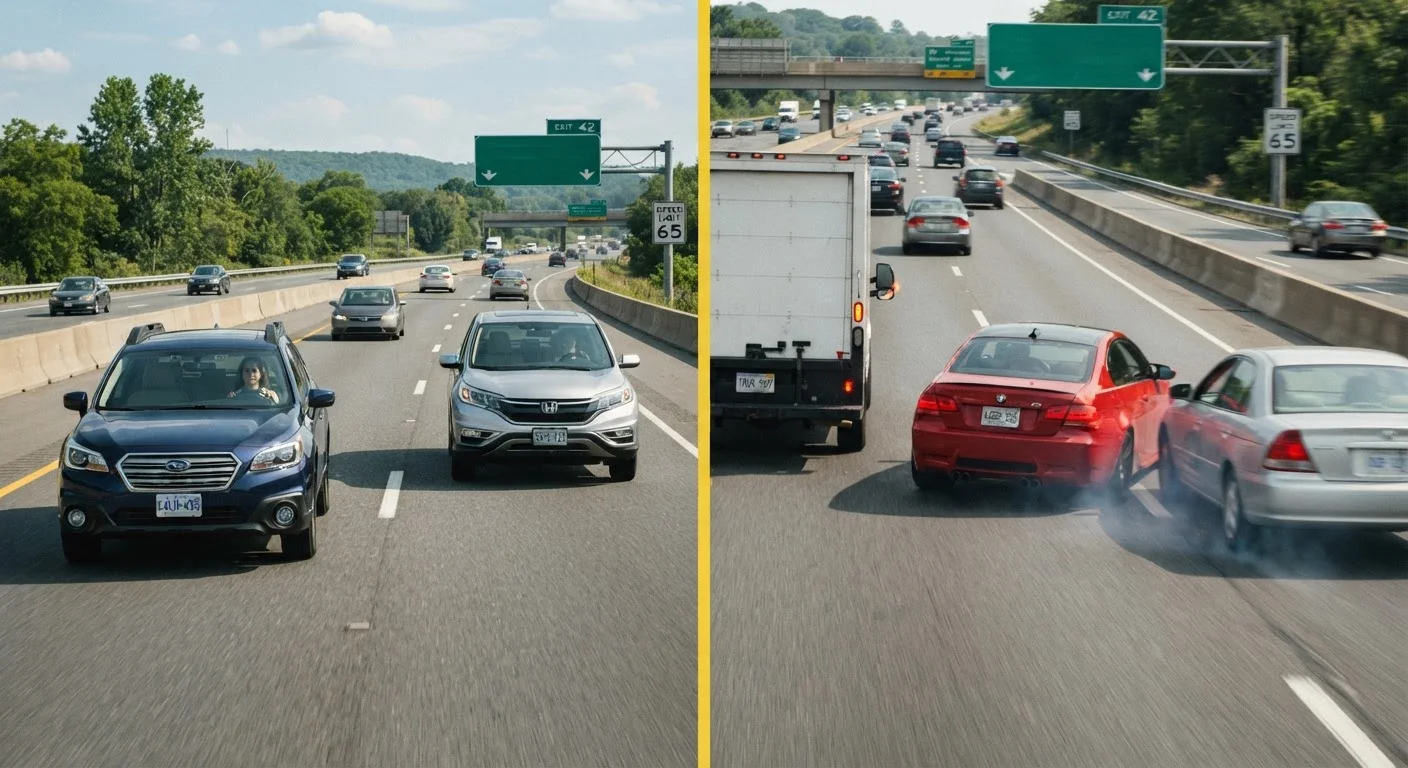
Photo: TheSearchHound.com | One Stop Answer To All Your Questions editorial
Key Takeaways
- Defensive driving means anticipating hazards before they develop and adjusting accordingly.
- Aggressive driving is a recognized traffic safety issue linked to a significant share of serious crashes.
- Maintaining adequate following distance is one of the most impactful habits a defensive driver can adopt.
- Aggressive behaviors like tailgating, speeding, and frequent lane changes compound risk for all nearby drivers.
- Defensive driving skills can be learned and reinforced at any experience level or age.
What Each Driving Style Actually Means
The terms get used loosely, but they describe genuinely distinct approaches. Defensive driving is a set of behaviors aimed at reducing risk by anticipating what other drivers, pedestrians, and road conditions might do - then leaving enough margin to respond safely. It's proactive rather than reactive.
Aggressive driving, by contrast, is broadly defined by traffic safety authorities as operating a vehicle in a way that endangers other people or property. That includes speeding, following too closely (tailgating), running red lights, making unsafe lane changes, and disregarding traffic signals. It's worth noting that aggressive driving shades into road rage when it becomes deliberate, targeted behavior - a legally distinct and more serious category.
The key distinction isn't confidence or assertiveness. An experienced, confident driver can be entirely defensive. The difference lies in intent and awareness: defensive drivers actively manage risk for everyone on the road; aggressive drivers prioritize their own pace or frustration over shared safety.
Side-by-Side: How They Compare in Practice
Seeing these behaviors charted side by side makes the contrast concrete. Most drivers exhibit a mix of both tendencies depending on conditions, fatigue, or stress - which is why understanding the distinction matters for self-assessment, not just for judging others.
| Criterion | Defensive Driving | Aggressive Driving |
|---|---|---|
| Following distance | 3+ seconds minimum | Often under 1 second |
| Speed management | Adjusted to conditions | Exceeds limits or flows of traffic |
| Lane changes | Signaled, timed, deliberate | Frequent, abrupt, unsignaled |
| Intersection behavior | Stops on yellow when safe to do so | Runs yellows and late reds |
| Awareness focus | Multiple vehicles, road ahead | Immediate vehicle ahead, own pace |
| Response to frustration | Disengages, creates space | May escalate or retaliate |
| Crash risk contribution | Reduces risk for self and others | Elevates risk for all nearby drivers |
Following distance is a particularly revealing example. Defensive drivers typically maintain at least a three-second gap to the vehicle ahead - more in poor weather or at highway speeds. Aggressive drivers routinely close that gap to under a second. The physics behind stopping distances make that margin far more consequential than it appears.
Why Aggressive Driving Is More Common Than Drivers Realize
~66%
Traffic fatalities involving aggressive driving
The AAA Foundation for Traffic Safety has estimated that aggressive driving behaviors are a factor in roughly two-thirds of U.S. traffic fatalities.
80%
Drivers who report experiencing road rage
An AAA Foundation survey found that approximately 80% of drivers reported experiencing significant anger, aggression, or road rage while driving in the prior year.
3 seconds
Recommended minimum following gap
Traffic safety educators widely recommend a three-second following gap as the baseline for defensive driving, with more space needed in adverse conditions.
Many aggressive behaviors feel routine to the drivers performing them. Exceeding the speed limit by 10 mph on a highway, accelerating through a yellow light, or cutting across lanes to gain a few car lengths are actions millions of drivers perform daily without considering them aggressive. Traffic safety researchers, however, classify these as elevated-risk behaviors precisely because they reduce the available time and space to respond to unexpected events.
Stress, time pressure, and anonymity behind the wheel all contribute. Research in traffic psychology consistently links aggressive driving to situational factors - running late, frustration with congestion, or perceived rudeness from another driver - rather than a stable personality type. That means it's something most drivers engage in intermittently, which makes self-awareness particularly important. Consistently safe drivers tend to recognize these triggers and have strategies for managing them before they influence behavior.
Building a More Defensive Approach
Defensive driving isn't a one-time decision - it's a collection of practiced habits. The core principles include maintaining adequate following distance, scanning well ahead rather than just the vehicle in front, signaling early and predictably, and adjusting speed to match actual road and weather conditions rather than just posted limits.
Scanning behavior deserves particular attention. Defensive drivers regularly check mirrors, track the movement of vehicles two or three cars ahead, and anticipate merge points, intersections, and pedestrian crossings before reaching them. This extended awareness is what creates reaction time. New drivers building foundational skills often focus on immediate vehicle control; shifting attention further ahead is the next major step toward true situational awareness.
Environmental context matters too. The techniques that work well on a suburban arterial road differ meaningfully from what's needed on a fast-moving highway. Understanding how city and highway driving differ helps drivers calibrate their defensive habits to the specific demands of each setting.
This article is for general informational purposes only and does not constitute professional driving instruction or legal advice. Readers seeking formal training are encouraged to consult a certified driving instructor or enroll in an accredited defensive driving course.
The content on this site is provided for informational purposes only and should not be considered a substitute for professional advice. While we strive to provide accurate and up-to-date information, we make no guarantees regarding its completeness or accuracy. Always consult a qualified professional for advice specific to your circumstances before making any decisions.