
DIY Home Repairs vs. Hiring a Professional: Where to Draw the Line

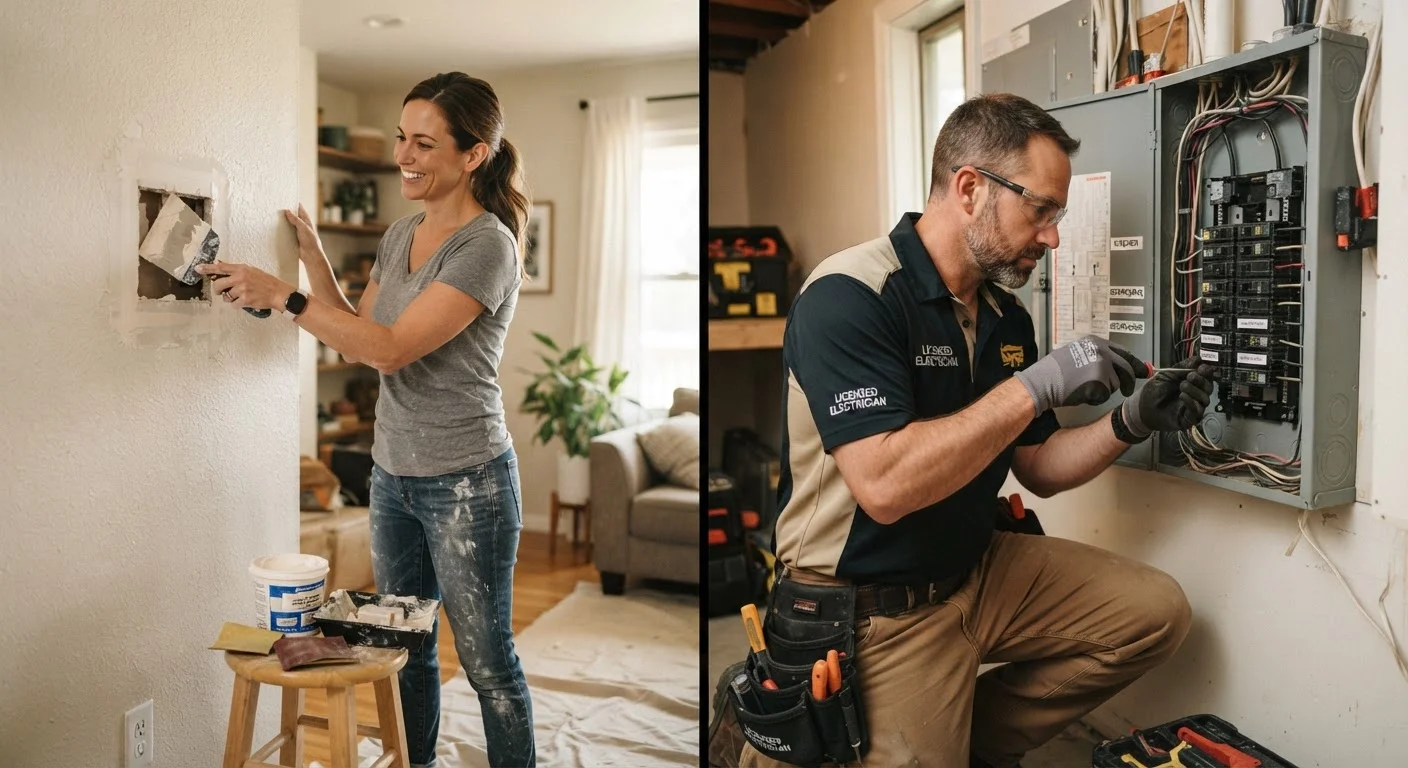
Photo: TheSearchHound.com | One Stop Answer To All Your Questions editorial
Key Takeaways
- Cosmetic and simple maintenance tasks are generally safe candidates for DIY work.
- Electrical, gas, structural, and plumbing-into-mains work typically requires licensed professionals and permits.
- Skipping a permit on regulated work can void your homeowner's insurance and complicate a future home sale.
- Your skill level, tools, and local code requirements all factor into the DIY-versus-pro decision.
- Deferred repairs-whether DIY or professional-tend to become more expensive over time.
Why This Decision Matters More Than Most Homeowners Realize
Every homeowner eventually faces the same fork in the road: pull up a tutorial and handle it yourself, or pick up the phone and call a pro. The stakes of that decision vary enormously depending on what the repair actually involves.
For straightforward tasks-painting a room, patching a small drywall hole, replacing a faucet aerator-DIY is often the sensible, money-saving choice. But for work that touches your home's electrical system, gas supply, or structural integrity, the risks of getting it wrong extend beyond a botched result. You're looking at potential safety hazards, failed inspections, voided insurance claims, and legal liability.
Understanding how deferred or mishandled maintenance compounds over time is the first step toward making smarter repair decisions from the start.
Tasks That Are Reasonable to DIY
A solid category of home repairs sits well within reach of a motivated homeowner with basic tools and a willingness to follow instructions carefully. These tasks share a few common traits: they don't require permits, they're reversible if you make a mistake, and errors won't create safety hazards for your household.
- Interior painting and caulking - One of the most forgiving DIY projects, provided you prep surfaces properly and choose the right products for the application.
- Minor drywall patching - Small holes from nails or doorknob damage are manageable. See our step-by-step guide to patching drywall holes for a clear walkthrough.
- Replacing fixtures and hardware - Swapping out cabinet pulls, light switch covers, or bathroom accessories typically involves no wiring or plumbing and carries minimal risk.
- Gutter cleaning and roof visual inspection - Routine maintenance tasks that, if skipped, lead to bigger problems. Ladder safety is the primary concern here.
- Weatherstripping and door threshold replacement - Improves energy efficiency and is straightforward to execute with standard tools.
- Toilet flapper and fill valve replacement - Simple repairs that stop running toilets and don't require touching supply lines inside walls.
Start Small to Build Confidence
Work That Belongs With a Licensed Professional
Certain repairs and upgrades aren't just technically difficult-they're regulated. Local building codes exist to protect occupants and neighbors, and many types of work require permits, inspections, and licensed trade contractors by law. Attempting this work without proper licensing can result in failed inspections, fines, and complications when you sell your home.
- Electrical panel work - Adding circuits, upgrading a panel, or any work beyond replacing an outlet or switch cover should involve a licensed electrician. This is one of the tasks our guide to deceptively difficult DIY tasks flags as carrying hidden risk.
- Gas line repairs or additions - Gas work requires licensed contractors in virtually every U.S. jurisdiction. Leaks are silent and potentially fatal.
- Structural modifications - Removing or altering walls, especially load-bearing walls, demands engineering knowledge and permits.
- Main plumbing and drain line work - Connecting to municipal supply lines or sewer systems typically requires a licensed plumber and inspection.
- Roof replacement or major repair - Beyond patching a loose shingle, roofing work involves fall hazard, flashing integration, and warranty implications.
- HVAC system installation or repair - Refrigerant handling is federally regulated; ductwork modifications affect fire safety and building code compliance.
Permits Protect You as the Homeowner
The Gray Zone: Tasks That Depend on Context
Between the clearly DIY-able and the clearly professional lies a middle ground where the right answer depends on your specific skills, tools, and local regulations.
Tile installation is one example. Small bathroom tile jobs are within reach for careful DIYers, but large-format tile on floors requires substrate preparation knowledge that many tutorials skip. Similarly, replacing a standard light fixture is often a DIY task for someone comfortable working with the power off and following wiring diagrams-but the same job in an older home with aluminum wiring or in a wet location (bathrooms, kitchens) warrants professional review.
The best approach in the gray zone is to assess three things honestly: Do you have the right tools? Do you understand what to do if something goes wrong mid-project? And does your local code require a permit for this work? If you're uncertain about any of those, getting a professional assessment costs far less than fixing a problem created by an underprepared repair attempt. Our overview of common DIY myths that lead to expensive fixes is worth reading before taking on anything in this category.
Comparing DIY vs. Professional Repair Across Key Dimensions
No single factor determines the right choice-cost, safety, legal compliance, and skill all play a role. The table below gives a structured comparison to help calibrate your decision.
| DIY | Licensed Professional | |
|---|---|---|
| Upfront cost | Lower (materials only) | Higher (labor + materials) |
| Risk if done incorrectly | Low to moderate on simple tasks | Mitigated by expertise and insurance |
| Permit & code compliance | Homeowner's responsibility | Typically managed by contractor |
| Insurance implications | Unpermitted work can void claims | Licensed work typically insurable |
| Time investment | Significant (learning + doing) | Minimal for homeowner |
| Suitable task types | Cosmetic, routine maintenance | Electrical, gas, structural, plumbing |
When weighing larger renovation decisions, also consider whether you need a general contractor or prefer to coordinate trades yourself. Our comparison of hiring a general contractor vs. managing subcontractors covers that tradeoff in depth.
The content on this site is provided for informational purposes only and should not be considered a substitute for professional advice. While we strive to provide accurate and up-to-date information, we make no guarantees regarding its completeness or accuracy. Always consult a qualified professional for advice specific to your circumstances before making any decisions.