
Drip Irrigation vs. Sprinkler Systems for Home Gardens

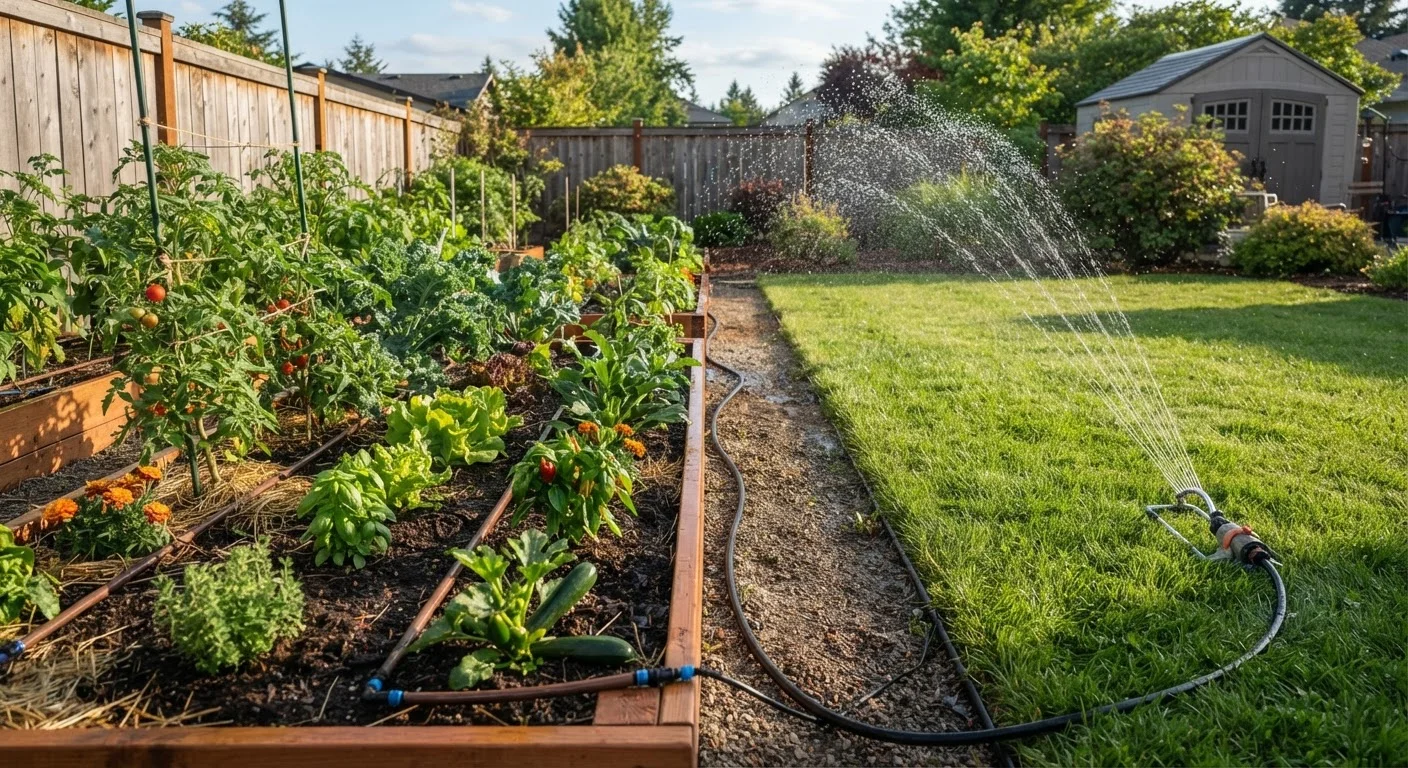
Photo: TheSearchHound.com | One Stop Answer To All Your Questions editorial
Key Takeaways
- Drip irrigation delivers water directly to root zones, reducing evaporation and runoff significantly.
- Sprinkler systems cover large, open areas efficiently but lose more water to evaporation and wind drift.
- Drip systems generally cost more upfront per square foot but can lower water bills over time.
- Overhead watering from sprinklers can promote fungal disease on foliage-dense plants.
- Many homeowners use both systems in different zones - lawn areas with sprinklers, beds with drip.
- Soil type, plant mix, and local water restrictions should all shape your system choice.
How Each System Actually Works
Understanding the mechanics helps clarify which system fits your garden's needs before you spend a dollar on materials or installation.
Drip irrigation runs water through a network of flexible tubing and emitters placed at or just below soil level, delivering slow, steady moisture directly to the base of each plant. Because water goes straight to the root zone, very little is lost to evaporation or wind. The flow rate is measured in gallons per hour rather than gallons per minute, which is part of what makes drip systems so efficient.
Sprinkler systems work by pressurizing water through a network of pipes and releasing it through spray heads or rotating rotors above ground. The water fans out in an arc, mimicking rainfall and covering a wide swath of ground. This is ideal for turf grass, which benefits from overhead coverage, but it means some water inevitably lands on pavement, evaporates mid-air, or wets plant leaves unnecessarily.
Both systems can be connected to timers and automated controllers, and both are available in DIY-friendly kits or as professionally installed setups. The right choice depends less on which technology is superior and more on what you're watering and why. See our garden planning guide for help assessing your space before committing to a system.
Efficiency, Cost, and Water Use
| Criterion | Drip Irrigation | Sprinkler Systems |
|---|---|---|
| Water efficiency | High - minimal evaporation and runoff | Moderate - some evaporation and overspray |
| Best application | Garden beds, shrubs, containers | Lawns, large open areas |
| Upfront installation cost | Low to moderate (scales with coverage) | Moderate to high (especially in-ground) |
| Foliage disease risk | Low - leaves stay dry | Higher - overhead wetting of leaves |
| DIY-friendliness | High - modular kits widely available | Moderate - in-ground systems require more labor |
| Maintenance needs | Emitter clogging, line checks | Head adjustments, winterization |
| Scalability | Easy to expand zone by zone | Requires planning zones upfront |
Drip irrigation is widely recognized as the more water-efficient option for garden beds. Because emitters release water slowly and directly into the soil, losses from evaporation and runoff are minimal. Sprinkler systems, by contrast, spray water into the air, where wind and heat can carry a meaningful portion away before it ever reaches plant roots. This matters especially in hot, dry climates or where local water restrictions apply.
Installation costs tell a different story, at least upfront. A basic drip system for a single raised bed can be assembled inexpensively with a kit, but scaling it to cover multiple garden zones adds cost. Professionally installed in-ground sprinkler systems require trenching, valves, and heads, which makes them a significant investment - though they also add to a home's appeal and usability.
Over time, the water savings from drip irrigation can offset its setup costs, particularly in regions where water rates are high. That said, sprinklers installed with smart controllers and rain sensors can also reduce waste meaningfully compared to manual watering. Common lawn watering myths - like the idea that more frequent watering is always better - can drive up costs with either system if left unchecked.
Plant Compatibility and Practical Limitations
Up to 50%
Water savings with drip vs. sprinkler irrigation
The EPA's WaterSense program estimates that drip irrigation can be up to 90% efficient, compared to roughly 50-70% for conventional sprinkler systems.
30-50%
Outdoor water use lost to inefficiency
According to the EPA, as much as half of outdoor water used for irrigation is wasted due to evaporation, wind, or overwatering.
9 billion gallons
Water used daily by U.S. homes for landscaping
The EPA estimates American households use roughly 9 billion gallons of water per day outdoors, making irrigation system efficiency a meaningful conservation issue.
The type of plants you're growing should carry significant weight in this decision. Vegetables, herbs, fruiting shrubs, and perennial flower beds all benefit from drip irrigation. Keeping foliage dry reduces the risk of fungal diseases like powdery mildew and leaf blight - problems that overhead watering can encourage. Drip also makes it easier to water between plants without saturating bare soil or promoting weed germination along pathways.
Lawns are a different situation. Turf grass grows in dense, even masses that are difficult to serve with drip lines, and the grass itself is not harmed by overhead watering. Sprinklers are purpose-built for this use case. Trying to drip-irrigate a lawn is neither practical nor cost-effective at scale.
Drip systems do come with maintenance considerations. Emitters can clog with mineral deposits or debris, especially in areas with hard water. Lines can be disrupted by digging, pests, or frost heave in colder climates. Sprinkler heads can also clog or break, and heads that are out of adjustment waste water by spraying sideways or onto hardscaping.
If you're working with raised beds, drip irrigation pairs especially well - the contained soil and defined planting zones make installation straightforward. Our raised bed overview covers the full setup considerations if you're planning that route. Pairing drip irrigation with the right mulch on top of your beds can further reduce surface moisture loss between watering cycles.
The content on this site is provided for informational purposes only and should not be considered a substitute for professional advice. While we strive to provide accurate and up-to-date information, we make no guarantees regarding its completeness or accuracy. Always consult a qualified professional for advice specific to your circumstances before making any decisions.