
Matter: The Smart Home Standard That's Trying to End Compatibility Chaos

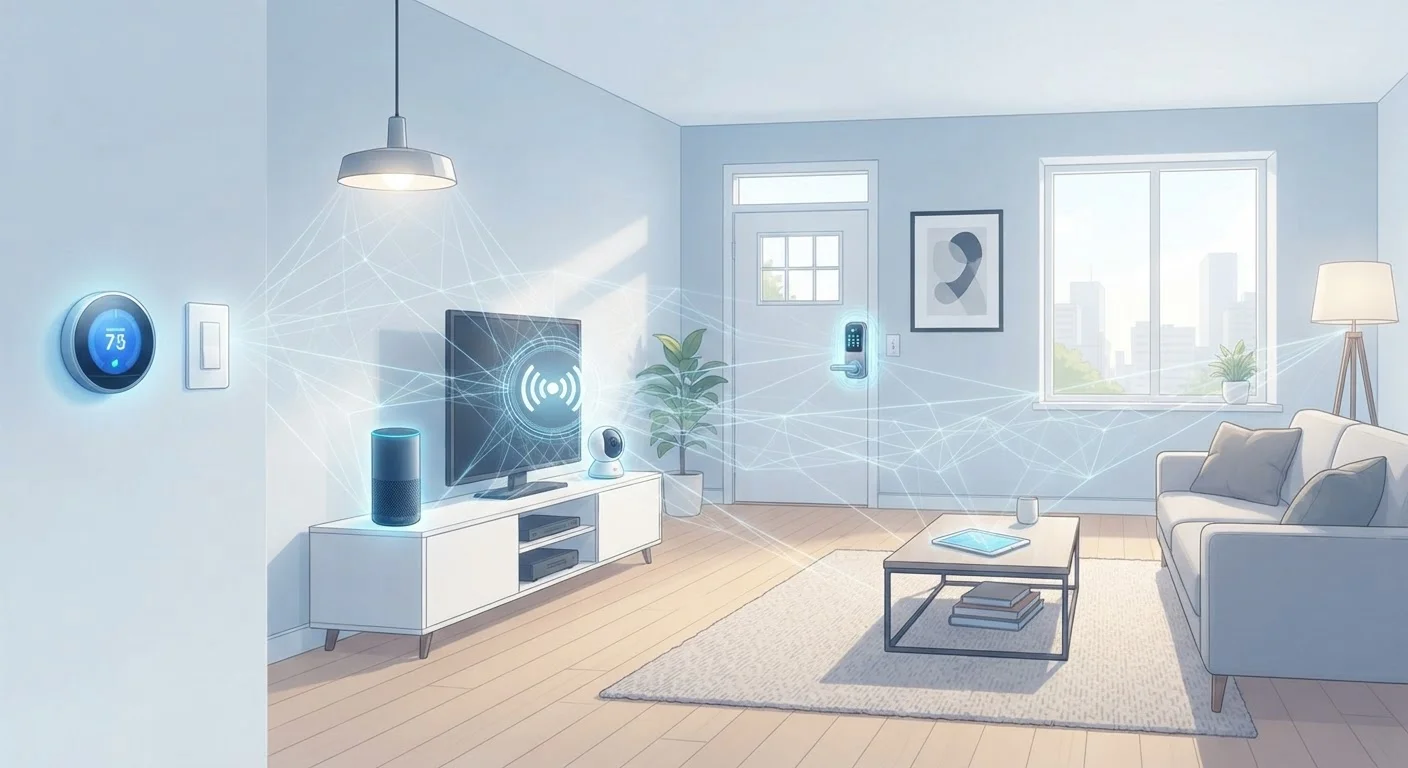
Photo: TheSearchHound.com | One Stop Answer To All Your Questions editorial
Key Takeaways
- Matter is an industry-wide standard designed to make smart home devices from different brands interoperable.
- It was created by the Connectivity Standards Alliance, with Apple, Google, Amazon, and Samsung among its key backers.
- Matter devices can work with multiple ecosystems simultaneously - not just one at a time.
- Not all existing devices are Matter-compatible; older products typically require hardware upgrades.
- Matter does not automatically solve every smart home problem, including privacy or feature parity across platforms.
Why Compatibility Has Been Such a Problem
For years, buying smart home devices has meant choosing sides. A set of smart bulbs designed for one ecosystem might refuse to cooperate with a thermostat built for another. Consumers found themselves locked into single-brand setups, buying redundant hubs, or simply giving up on automation features that should have worked out of the box.
This fragmentation wasn't accidental - it was a byproduct of competing proprietary platforms, each company building its own ecosystem to maximize customer retention. The result was a market full of capable devices that couldn't reliably talk to each other. Understanding this context is key to appreciating what Matter is actually trying to accomplish. For a broader look at how devices communicate within these ecosystems, see how smart home ecosystems work.
550+
Matter-certified devices at launch milestone
The Connectivity Standards Alliance reported more than 550 certified Matter devices within the standard's first year of commercial availability.
280+
Member companies in the CSA alliance
The Connectivity Standards Alliance, which governs the Matter standard, includes over 280 member companies spanning device makers, platform operators, and chip manufacturers.
2022
Year Matter specification v1.0 launched
Matter version 1.0 was officially released in October 2022, following years of collaborative development among major technology industry stakeholders.
What Matter Actually Does
Matter establishes a shared application layer - a common rulebook - so devices from different manufacturers can understand each other's commands and status updates. When a device carries the Matter certification mark, it has been tested to confirm it meets this shared specification.
Crucially, Matter prioritizes local communication. Where older integrations often routed commands through distant cloud servers (introducing latency and single points of failure), Matter-enabled devices can communicate directly over your home network. This means many automations can continue working even if your internet connection goes down.
Another significant feature is multi-admin support. A Matter device can be added to more than one smart home platform at once. You're not forced to pick between Apple HomeKit, Google Home, or Amazon Alexa - a certified device can, in principle, respond to all of them. This represents a meaningful shift from the all-or-nothing ecosystem choices consumers previously faced.
Look for the Matter Badge Before You Buy
What Matter Doesn't Fix
Matter is not a complete solution to every smart home frustration. The standard defines a baseline of interoperability, but manufacturers still control which features they expose through Matter versus their own proprietary apps. A smart camera, for example, might offer basic on/off support through Matter but reserve advanced motion detection features for its native application.
Privacy is another area where Matter has limited reach. While local processing reduces some cloud exposure, each platform and manufacturer still sets its own data collection policies. Readers who want to understand the broader privacy picture should review the privacy trade-offs of always-on smart home devices.
There is also the question of legacy hardware. Matter requires updated firmware or new hardware - most devices purchased before 2022 will not receive Matter support. Consumers with established setups may find their existing investments unaffected by the new standard.
Feature Parity Isn't Guaranteed
Where Matter Stands and What to Watch For
Matter launched its first full specification in late 2022, and subsequent versions have been expanding the range of supported device categories. Adoption among major manufacturers has grown steadily, and most new flagship smart home devices now carry or are expected to carry Matter certification.
For readers building or expanding a smart home setup, checking for Matter certification is a reasonable future-proofing step - particularly if avoiding ecosystem lock-in is a priority. If you're working within a budget, building a flexible smart home without overspending is a practical companion read.
It's also worth familiarizing yourself with underlying terminology - words like Thread border router, fabric (the term Matter uses for a trusted network of devices), and commissioner appear frequently in setup documentation. Our smart home terminology reference breaks these terms down in plain language.
Matter represents genuine progress toward interoperability, but it is an evolving standard. Reading manufacturer documentation carefully and verifying certification before purchasing remains sound advice - the promise of compatibility is most reliable when confirmed, not assumed.
Frequently Asked Questions
The content on this site is provided for informational purposes only and should not be considered a substitute for professional advice. While we strive to provide accurate and up-to-date information, we make no guarantees regarding its completeness or accuracy. Always consult a qualified professional for advice specific to your circumstances before making any decisions.