
Shade Gardening: Plants and Strategies for Low-Light Yards

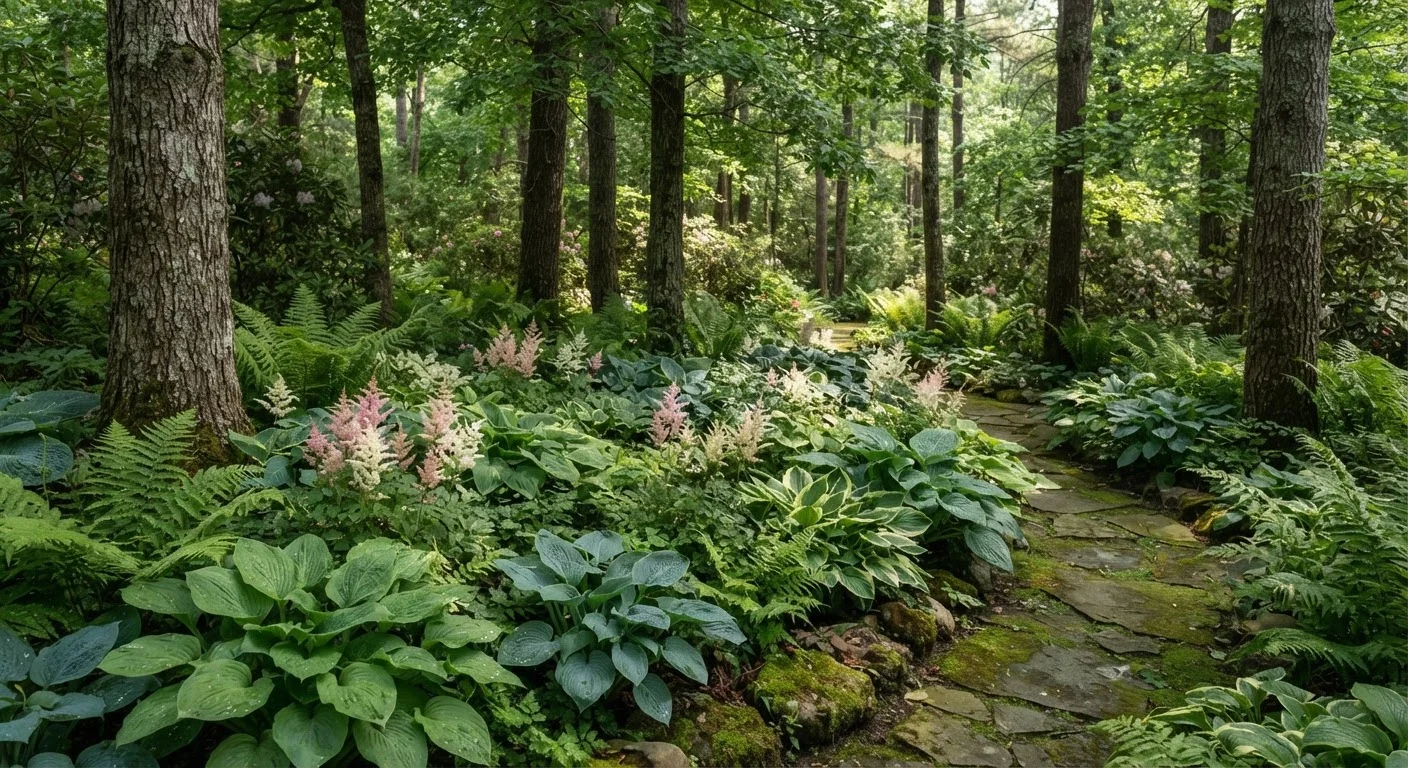
Photo: TheSearchHound.com | One Stop Answer To All Your Questions editorial
Key Takeaways
- Shade is not uniform - partial, dappled, and deep shade require different plant choices.
- Many native plants thrive in low-light conditions with minimal maintenance.
- Tree root competition means soil amendment and watering habits matter more under canopy.
- Layering plants by height creates visual interest and mimics natural woodland structure.
- Mulch is especially valuable in shaded beds for moisture retention and root protection.
Understanding Shade: It's Not All the Same
Before selecting a single plant, it helps to know exactly what kind of shade you're working with. Gardeners and horticulturalists generally recognize three main categories:
- Partial shade: Two to four hours of direct sunlight daily, often in the morning or late afternoon. Many flowering plants do well here.
- Dappled shade: Filtered light that moves throughout the day - typically under deciduous trees with open canopies. A surprisingly wide range of plants tolerates this condition.
- Deep or full shade: Fewer than two hours of direct sun, common under dense evergreens or on the north-facing side of structures. Plant options narrow here, but they exist.
Spend a day or two observing how light moves through your yard at different times. You may find that what feels like deep shade at noon brightens significantly by late afternoon. This kind of mapping is exactly what's covered in our garden planning guide, which walks through how to assess sunlight, drainage, and spacing before committing to a design.
Shade Changes With the Seasons
Best Plants for Shady Conditions
The right plant palette transforms a dim corner into a genuine garden feature. Here are reliable performers organized by shade tolerance:
For Partial and Dappled Shade
- Hostas - Bold foliage in green, blue, and gold; slug-resistant varieties available.
- Astilbe - Feathery plumes in pink, red, and white; prefers moist soil.
- Bleeding heart (Lamprocapnos spectabilis) - Arching stems with heart-shaped flowers; dies back in summer heat.
- Coral bells (Heuchera) - Dramatic foliage color; tolerates drier shade than many alternatives.
For Deep or Full Shade
- Ferns - Native species like ostrich fern and Christmas fern are especially low-maintenance.
- Lily of the valley - Spreads readily; good ground cover under dense canopy (note: all parts are toxic if ingested).
- Pachysandra - Evergreen ground cover; handles dry shade and root competition well.
- Lungwort (Pulmonaria) - One of the earliest spring bloomers in shaded beds.
Many of these plants are also native or near-native to North American woodlands. Our article on native plants and their ecological value explains why leaning toward regional natives often means less work and greater resilience over time.
When selecting hostas for deep shade, prioritize blue-leaved varieties - they hold their color better than gold or green types in very low light conditions.
Plant shade perennials in early fall rather than spring - cooler temperatures reduce transplant stress and allow roots to establish before summer heat arrives.
Soil Preparation Under Trees
Growing plants beneath trees introduces a challenge that sun gardens rarely face: root competition. Mature tree roots are aggressive and close to the surface, drawing moisture and nutrients from the same zone where you want garden plants to establish.
Rather than digging deeply - which can injure tree roots and is generally not recommended - focus on building up rather than digging down. Add two to four inches of good-quality compost on top of the existing soil, working it in only as shallowly as the surface roots allow. This improves fertility and water retention without cutting through the tree's feeder roots.
Mulching is equally important in shaded beds. A two- to three-inch layer of organic mulch moderates soil temperature, retains moisture, and gradually feeds the soil as it breaks down. Keep mulch a few inches back from both plant stems and the tree's root flare. Our guide to mulch types breaks down the tradeoffs between wood chips, straw, and other materials so you can choose what suits your situation.
Avoid the temptation to raise a solid berm of soil around a tree's base to create a planting area - this is a common mistake that can cause long-term harm to the tree.
Don't Pile Soil Against Tree Trunks
Design Strategies That Work in Low Light
Shade gardens reward thoughtful layering. Look at a natural woodland: a tall canopy layer, a shrub understory, herbaceous plants below that, and ground covers at the base. Replicating this structure - even loosely - gives a shade garden visual depth and seasonal interest.
Use Foliage as the Main Event
In low-light conditions, flowers are often fleeting, but foliage is permanent. Vary leaf size, texture, and color: pair the fine fronds of a fern against the broad paddle of a hosta, or use the dark purple of a Heuchera to anchor a grouping of pale green plants.
Embrace the Edges
Shade-to-sun transitions are some of the most dynamic spots in a garden. Place sun-loving perennials at the outer edge of a canopy where they catch more light, then transition into shade-tolerant species as the tree cover deepens. This creates a natural gradient that looks intentional.
Consider Raised Solutions Where Appropriate
In areas where tree root competition is extreme, a shallow raised structure on top of existing soil can give shade-tolerant plants a better start. This approach is not always necessary, but our overview of raised garden beds provides a balanced look at when this approach makes sense and when it doesn't.
30%
Of U.S. residential yards have significant tree shade
Estimates from landscape industry surveys suggest roughly a third of home yards have heavy canopy coverage affecting planting decisions.
2-4 hrs
Daily sun defining partial shade
Horticultural guidelines define partial shade as receiving two to four hours of direct sunlight, opening up a broad selection of flowering perennials.
3 inches
Recommended organic mulch depth for shade beds
University extension services generally recommend two to three inches of organic mulch to retain moisture and suppress weeds in shaded planting areas.
Ongoing Care and Common Mistakes
Shade gardens generally require less watering than full-sun beds - but not no watering. During dry spells, even plants adapted to shaded conditions can struggle. Check soil moisture a few inches below the surface rather than relying on surface appearance, which can be deceptive under canopy.
Fertilizing Carefully
Slow-release granular fertilizers applied in spring are generally sufficient for most shade perennials. Over-fertilizing encourages lush, weak growth that is more susceptible to disease in the humid conditions that often accompany shade.
Common Pitfalls to Avoid
- Planting sun-lovers in shade - Even one hour less light than a plant requires results in leggy, sparse growth and poor flowering.
- Neglecting drainage - Shaded areas under tree canopies can alternate between dry and waterlogged. Choose plants that tolerate that range, or amend soil to improve drainage.
- Compacting soil while working - Lay boards or kneeling pads across beds when planting or weeding to avoid compacting soil around feeder roots.
Shade gardening is genuinely different from the full-sun vegetable and annual beds many gardeners start with. If you're used to growing in bright conditions, our introduction to vegetable gardening highlights how site selection fundamentally shapes what's possible - a useful contrast when rethinking shaded spaces.
With the right plant selection, prepared soil, and a layered design, a low-light yard becomes an asset rather than a limitation.
The content on this site is provided for informational purposes only and should not be considered a substitute for professional advice. While we strive to provide accurate and up-to-date information, we make no guarantees regarding its completeness or accuracy. Always consult a qualified professional for advice specific to your circumstances before making any decisions.