
Smart Thermostats: What They Can and Can't Do for Your Energy Bill

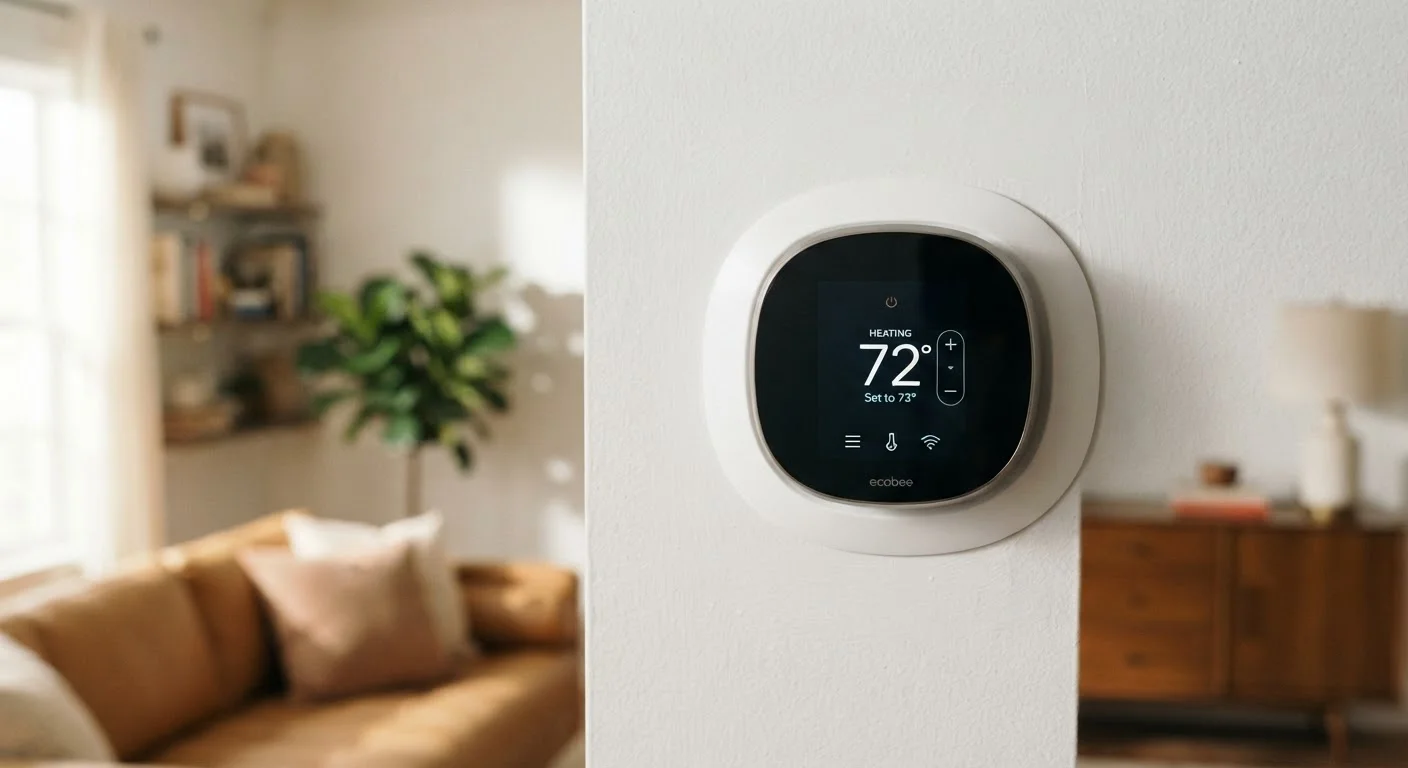
Photo: TheSearchHound.com | One Stop Answer To All Your Questions editorial
Key Takeaways
- Smart thermostats can reduce HVAC energy use, but savings vary significantly based on home insulation and usage patterns.
- Scheduling and remote access are genuine strengths; passive learning features deliver mixed results in practice.
- A poorly insulated home limits how much any thermostat - smart or otherwise - can lower your energy bill.
- Installation compatibility matters: some older HVAC systems require a professional to install a smart thermostat correctly.
- Privacy considerations exist with any always-on connected device in your home.
Remote access prevents unnecessary heating or cooling
Adjusting your home's temperature from anywhere via a smartphone app means HVAC systems aren't running full-tilt in an empty house due to a forgotten setting.
Schedule-based automation reduces manual guesswork
Households with predictable routines can program setback temperatures during away hours, reducing how long the system runs at comfort-level settings without sacrificing comfort on arrival.
Energy reports surface wasteful usage patterns
Usage dashboards can reveal runtime spikes tied to specific days or conditions, helping homeowners identify HVAC inefficiencies or scheduling gaps worth correcting.
Integrates with broader home automation setups
When connected to occupancy sensors or smart home platforms, thermostats can respond to whether anyone is actually home - not just a preset schedule.
Learning features underperform with irregular schedules
Auto-learning algorithms are optimized for consistent routines. Households with variable hours often find the device makes incorrect predictions, requiring frequent manual corrections.
Cannot offset poor home insulation or air sealing
If conditioned air is escaping through gaps in walls, attic bypasses, or drafty windows, the HVAC system runs harder regardless of thermostat sophistication - a fundamental limit on savings.
Compatibility gaps with older or specialized HVAC systems
Systems lacking a C-wire, using proprietary controls, or relying on radiant heat may require additional hardware, professional installation, or may be incompatible with certain devices altogether.
Savings are often smaller than marketing suggests
Advertised savings figures frequently reflect best-case scenarios with ideal usage patterns; real-world savings in average homes tend to be more modest and depend on how the device is configured.
Data collection and privacy trade-offs
Smart thermostats continuously collect occupancy and behavioral data that is typically transmitted to manufacturer cloud servers, raising privacy considerations for some households.
What Smart Thermostats Actually Do
A smart thermostat is a Wi-Fi-connected device that gives you more precise, automated control over your home's heating and cooling system. Unlike a basic programmable thermostat, it can be adjusted remotely via a smartphone app, respond to your schedule automatically, and - in some models - learn patterns from your behavior over time.
Most smart thermostats also display energy usage reports, letting you see how long your HVAC system ran on a given day. Some integrate with voice assistants or broader home automation routines to coordinate with other devices like smart lighting or occupancy sensors.
The core promise is straightforward: by heating or cooling your home only when needed, you avoid the energy waste that comes from conditioning an empty house or forgetting to adjust the temperature before leaving.
Where Smart Thermostats Deliver Real Value
Remote access prevents unnecessary heating or cooling
Adjusting your home's temperature from anywhere via a smartphone app means HVAC systems aren't running full-tilt in an empty house due to a forgotten setting.
Schedule-based automation reduces manual guesswork
Households with predictable routines can program setback temperatures during away hours, reducing how long the system runs at comfort-level settings without sacrificing comfort on arrival.
Energy reports surface wasteful usage patterns
Usage dashboards can reveal runtime spikes tied to specific days or conditions, helping homeowners identify HVAC inefficiencies or scheduling gaps worth correcting.
Integrates with broader home automation setups
When connected to occupancy sensors or smart home platforms, thermostats can respond to whether anyone is actually home - not just a preset schedule.
The strongest case for a smart thermostat is scheduling flexibility. If your household has a predictable routine - work hours, school pickups, weekend patterns - a well-configured schedule can meaningfully reduce how long your HVAC system runs at full capacity. The U.S. Department of Energy has noted that turning your thermostat back 7-10°F for eight hours per day can reduce annual heating and cooling costs by around 10%, though actual results vary by home and climate.
Remote access is genuinely useful. Forgetting to adjust the temperature before a long trip no longer means coming home to a house that's been conditioned unnecessarily for days. That kind of one-time correction can offset a meaningful portion of a device's cost over time.
Where the Limits Show Up
Learning features underperform with irregular schedules
Auto-learning algorithms are optimized for consistent routines. Households with variable hours often find the device makes incorrect predictions, requiring frequent manual corrections.
Cannot offset poor home insulation or air sealing
If conditioned air is escaping through gaps in walls, attic bypasses, or drafty windows, the HVAC system runs harder regardless of thermostat sophistication - a fundamental limit on savings.
Compatibility gaps with older or specialized HVAC systems
Systems lacking a C-wire, using proprietary controls, or relying on radiant heat may require additional hardware, professional installation, or may be incompatible with certain devices altogether.
Savings are often smaller than marketing suggests
Advertised savings figures frequently reflect best-case scenarios with ideal usage patterns; real-world savings in average homes tend to be more modest and depend on how the device is configured.
Data collection and privacy trade-offs
Smart thermostats continuously collect occupancy and behavioral data that is typically transmitted to manufacturer cloud servers, raising privacy considerations for some households.
Marketing language around smart thermostats often outpaces reality. "Learning" algorithms sound impressive, but in practice they work best in households with highly consistent routines. Families with variable schedules, frequent guests, or shift workers may find the device's predictions are often wrong - requiring frequent manual overrides that negate the automation benefit.
More fundamentally, no thermostat can compensate for a poorly insulated home. If conditioned air is escaping through gaps in attic insulation or drafty windows, your HVAC system works harder regardless of how sophisticated your thermostat is. Attic insulation and ventilation are often a higher-impact investment than upgrading your thermostat.
Compatibility is another practical constraint. Homes with older HVAC systems - particularly those without a common wire (C-wire) - may require an adapter or professional installation. Some radiant heating systems, multi-stage heat pumps, or proprietary setups are incompatible with certain smart thermostat models entirely. Always verify compatibility before purchasing. For a deeper look at how different heating systems behave, see how furnaces and heat pumps compare.
Check Compatibility Before You Buy
Privacy and Connected-Device Considerations
Smart thermostats collect data - including your daily schedule, occupancy patterns, and temperature preferences. This information is typically processed through the manufacturer's cloud servers. For most households this is an acceptable trade-off, but it's worth understanding what data your device collects and what the manufacturer's data-sharing policies involve.
For a fuller picture of what always-on connected devices gather and how to manage exposure, see our article on privacy trade-offs of smart home devices. If privacy is a primary concern, some thermostats offer more local-control options than others - research this before committing to a platform.
Getting the Most Out of a Smart Thermostat
The device itself is only part of the equation. To realize genuine savings, spend time configuring a schedule that reflects your household's actual patterns rather than relying entirely on auto-learning. Use the energy history reports to identify days with unusually high HVAC runtime - those spikes often point to a drafty door, a malfunctioning system component, or a schedule that needs adjustment.
Pairing a smart thermostat with broader home efficiency improvements - sealing air leaks, upgrading insulation, servicing your HVAC system annually - consistently delivers greater combined savings than the thermostat alone. Those interested in building out a connected home without overspending can find practical guidance in our piece on building a smart home on a budget. And if you're curious about which smart home promises hold up under scrutiny, common myths about smart home devices is worth a read before making any purchase decisions.
~10%
Potential annual HVAC savings from setback scheduling
The U.S. Department of Energy estimates turning thermostats back 7-10°F for eight hours a day can reduce heating and cooling costs by around 10%, though results vary by home and climate.
40-50%
Share of home energy use tied to heating and cooling
The U.S. Energy Information Administration consistently identifies space heating and cooling as the largest single category of residential energy consumption.
The content on this site is provided for informational purposes only and should not be considered a substitute for professional advice. While we strive to provide accurate and up-to-date information, we make no guarantees regarding its completeness or accuracy. Always consult a qualified professional for advice specific to your circumstances before making any decisions.